

Understanding the Texas Homestead Exemption: How It Can Save You Money on Property Taxes
Owning a home in Texas comes with pride, comfort, and responsibility one of which is paying property taxes. But there’s good news: the Texas homestead exemption offers homeowners a valuable way to reduce their annual property tax bill. Whether you’re a first-time homeowner or have owned your property for years, understanding how this exemption works can help you save hundreds or even thousands of dollars each year.
In this guide, we’ll break down what the Texas homestead exemption is, who qualifies, how to apply, and how much you can save plus tips to avoid common filing mistakes.
What Is the Texas Homestead Exemption?
The Texas homestead exemption is a legal provision that allows homeowners to reduce the taxable value of their primary residence. In simple terms, it means that the state and local taxing authorities will only charge property taxes on a portion of your home’s value not the entire amount.
For example, if your home is valued at $300,000 and you qualify for a $40,000 homestead exemption, you’ll only pay property taxes on $260,000. That reduction translates into real savings every year.
Beyond saving money, the Texas homestead exemption also provides important protections. Under Texas law, your homestead cannot be seized by most creditors, offering a layer of financial security for your family home.
Who Qualifies for the Homestead Exemption in Texas
Not every property qualifies for this tax break. To claim the Texas homestead exemption, you must meet specific eligibility requirements:
Primary Residence:
The property must be your principal place of residence. You cannot claim the exemption on rental properties, vacation homes, or investment real estate.Ownership:
You must own the property as of January 1st of the tax year for which you’re applying.Individual Applicant:
The exemption applies only to individuals, not corporations or partnerships.Driver’s License or ID Requirement:
The address on your Texas driver’s license or state-issued ID must match the property’s address.
Certain groups such as seniors (65 and older), disabled individuals, and veterans may qualify for additional exemptions on top of the standard homestead exemption.
If you’re planning to buy a home in Texas soon, it’s worth understanding these qualifications early so you can take advantage of the exemption immediately after closing.
How to Apply for a Texas Homestead Exemption
Applying for the Texas homestead exemption is simple and completely free. You don’t need to hire a third-party service to file it all you need is the proper form and supporting documents.
Here’s a step-by-step guide:
Download the Application:
Visit your county appraisal district’s website and download the Homestead Exemption Application (Form 50-114).Fill Out the Form:
Provide your name, property address, and proof of ownership. Be sure your driver’s license or ID shows the same address.Submit Your Application:
Mail or deliver the completed form to your county appraisal district office. Some counties allow you to file online for added convenience.Deadline:
Applications are typically due by April 30th of the tax year, but it’s best to confirm the exact deadline with your local appraisal district.
Once your application is approved, the exemption stays in place as long as you continue to live in the home.
If you’re thinking of selling your property and moving to a new one, check out our home selling guide to learn how to maximize your sale while protecting your exemption status for your next residence.
Types of Homestead Exemptions Available
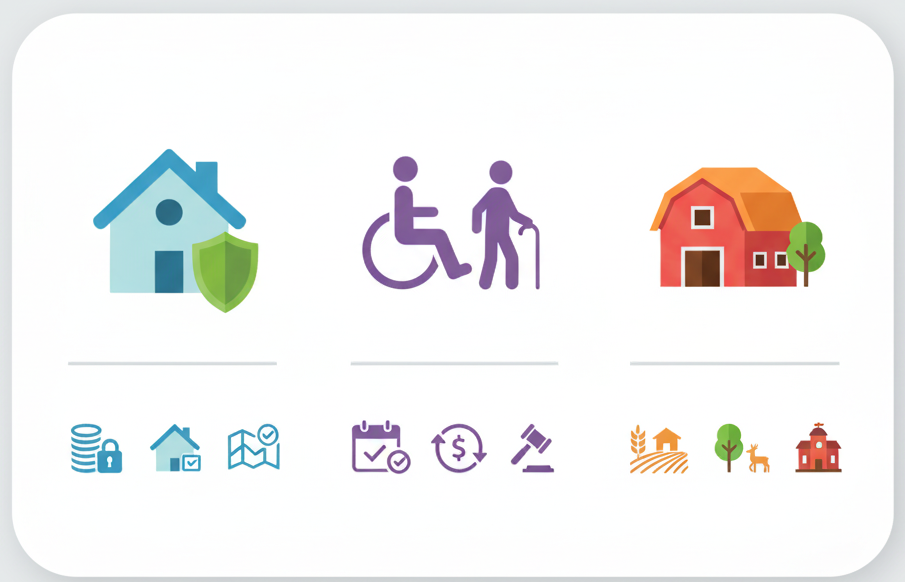
Texas offers several variations of the homestead exemption, depending on your personal situation. Here are the main types you should know:
General Residence Homestead Exemption:
Available to all homeowners for their primary residence. This is the most common type.Over-65 Exemption:
Homeowners aged 65 or older can receive an additional exemption amount, further reducing their property tax burden.Disabled Person Exemption:
Available to homeowners with disabilities, as defined by the Social Security Administration.Veteran’s Exemption:
Disabled veterans or their surviving spouses may qualify for significant property tax reductions, up to a full exemption in some cases.Surviving Spouse Exemption:
Surviving spouses of veterans, first responders, or certain public servants may also qualify for property tax relief.
Each exemption category has unique eligibility criteria, so it’s worth checking with your local appraisal district to ensure you apply for every one you’re entitled to.
For homebuyers exploring options across Texas, understanding these exemptions is just as critical as reviewing mortgage rates or neighborhood amenities another reason to consult our Buying a Home in Texas page before making your next move.
How Much You Can Save on Property Taxes
The amount you save through the Texas homestead exemption depends on your home’s appraised value and local tax rates. On average, homeowners can save $1,000 to $3,000 per year, though the exact figure varies by county.
Here’s a quick example:
If your home is valued at $350,000 and your county offers a $40,000 exemption, your taxable value drops to $310,000. If your local property tax rate is 2%, you’ll save about $800 per year and more if you qualify for additional exemptions.
These savings can make a big difference over time, especially as property values continue to rise in Texas.
If you’re preparing to sell and move to another part of the state, these savings could also make your listing more attractive to potential buyers. Learn how to position your home effectively with our Selling a Home in Texas resource.
Common Mistakes When Filing for the Exemption
Even though the process is simple, many homeowners make mistakes when applying for the Texas homestead exemption. Here are the most common pitfalls to avoid:
Missing the Deadline:
Applications are typically due by April 30th. Late submissions may delay your savings for an entire year.Incorrect Address on ID:
The address on your ID must exactly match your homestead property address. This is one of the most common reasons applications are denied.Applying for Multiple Homes:
You can only claim one homestead exemption — on your primary residence. Applying for more than one is considered fraud and can lead to penalties.Not Updating Ownership Records:
If you’ve recently bought your home, make sure the county appraisal district updates your ownership information before you apply.Falling for Paid Filing Services:
Filing is completely free. Avoid companies that charge to “help” you apply for the exemption.
By avoiding these errors, you can ensure a smooth and successful exemption process.
Frequently Asked Questions About the Texas Homestead Exemption
1. Do I have to apply every year?
No. Once your Texas homestead exemption is approved, it automatically renews as long as you continue living in the home.
2. Can I apply if I just bought my home?
Yes, but the exemption will apply for the following tax year if you purchased the property after January 1.
3. Can I get an exemption if I move to a new home?
Yes, but you’ll need to reapply for the exemption at your new primary residence.
4. What if I rent out part of my home?
You can still qualify for the exemption as long as the property is your primary residence.
5. How can I check the status of my application?
Contact your county appraisal district or check their website for updates on your exemption status.
Final Thoughts
The Texas homestead exemption is one of the most valuable benefits available to homeowners in the state. It not only lowers your property tax bill but also provides vital financial protection for your home. By understanding how it works, ensuring you qualify, and applying correctly, you can take full advantage of this tax-saving opportunity.
If you’re buying or selling a home in Texas, understanding how the exemption impacts your property’s value and tax responsibilities is key. At Maverick Real Estate, we help Texas homeowners make informed financial decisions from purchasing your dream home to optimizing ownership benefits. Our team is here to guide you through every stage of homeownership.